




Toddler Montessori Rainbow Stacking Color Sorting Toys — Honest Review
This wooden set combines rainbow stacking, color sorting and a bead-clipping matching game aimed at children aged 3–6. It promises to support fine motor skills, early counting and color recognition through open-ended play. Below I share how it performs in everyday use, what I liked and where it could be better, and who will get the most value from it.
What this toy is and how it helps
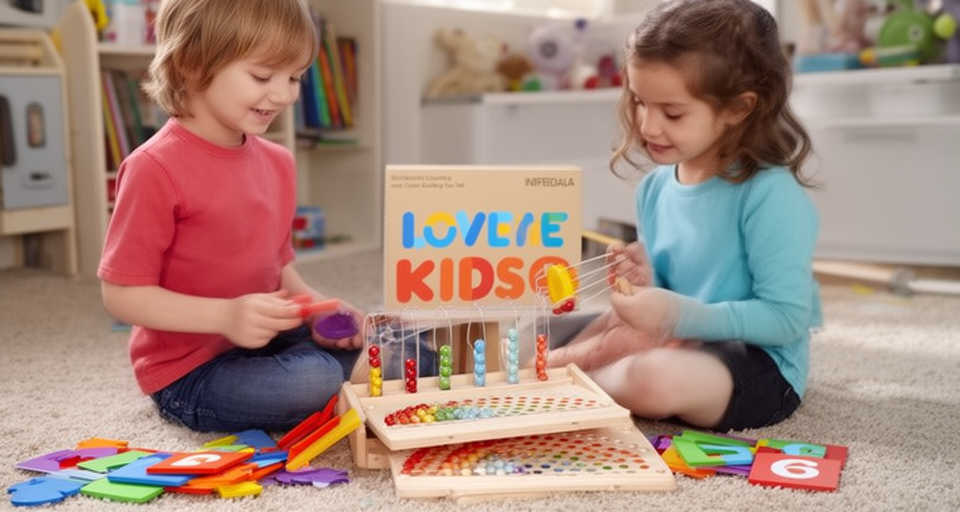
At its core this is a small wooden learning kit. Pieces include rainbow-shaped stacking blocks, peg board pieces and clip-on beads for matching and counting. The parts are sized for toddler hands and the activities are simple: stack the arches, sort colors, or clip beads to count. These actions stimulate hand-eye coordination, finger strength and basic number sense. The wooden construction and bright paint make the kit inviting while keeping play grounded in tactile experience.
Pros
- Good for fine motor practice — stacking, clipping and placing pegs require controlled movement.
- Multiple activities — stacking, color sorting and bead matching extend play value.
- Simple, open-ended design — encourages creativity rather than a single learned outcome.
- Wooden pieces feel sturdy in hand and are less noisy than plastic alternatives.
- Compact and easy to store — suitable for small play spaces or travel.
Cons
- Paint quality varies — some pieces can show wear after frequent use or chewing.
- Small parts — beads and pegs are a choking risk for children under recommended age.
- Limited challenge for older or more advanced children — play may become repetitive for 5–6 year olds.
- Instructions are minimal — caregivers may need to invent learning games to get the most out of it.
Who this is right for
This set works well for toddlers around 3–4 years who are moving from simple stacking to more precise hand control. It is ideal for parents or educators who want a compact, tactile Montessori-style toy that encourages color recognition, early counting and fine motor skills. The wooden feel and open-ended pieces suit families who prefer low-tech, durable toys.
Who should look elsewhere
If your child is under 3 or still mouthing objects, choose larger, single-piece toys to reduce choking risk. If you need an advanced counting or math toy for a 5–6 year old, a more structured activity with progressive levels or puzzle complexity will be a better fit. Also, if you want machine-washable or fully non-painted toys for allergy or finish concerns, check alternatives.
Short comparison with similar toys
Compared to a classic solid wooden rainbow stacker, this set adds bead clipping and a peg board for extra activities. That gives it broader learning possibilities than a simple arch stacker, though the individual pieces are smaller. Against premium Montessori brands, it generally costs less but can lag behind in paint durability and finish quality. If you want higher-end materials, look at established wooden toy makers; for value and variety, this set sits in the mid-budget range.
Practical tips for parents
- Supervise play for younger toddlers and keep beads out of reach when not in use.
- Use the set for short, guided activities — counting aloud, color hunts and timed stacking games.
- Wipe with a damp cloth to clean; avoid soaking painted wood to protect the finish.
- Rotate with other toys to keep the activities engaging over time.
Final verdict
This Montessori-style rainbow stacking and color sorting set offers practical learning value at a reasonable price. It supports fine motor development and early math concepts in a tactile way. The main trade-offs are paint durability and small parts, so caregiver supervision and reasonable expectations for longevity are important. For parents seeking an affordable, compact wooden kit that encourages color recognition and counting, this is a solid choice. If you need heavy-duty materials or advanced challenge for older kids, consider higher-end or larger alternatives.
Overall recommendation: Good for preschool-age children who benefit from hands-on, open-ended play. Treat it as a learning supplement rather than a long-term investment that will withstand rough play without some wear.