




Learning Resources MathLink Cubes Preschool Math Activity Set — Honest Review
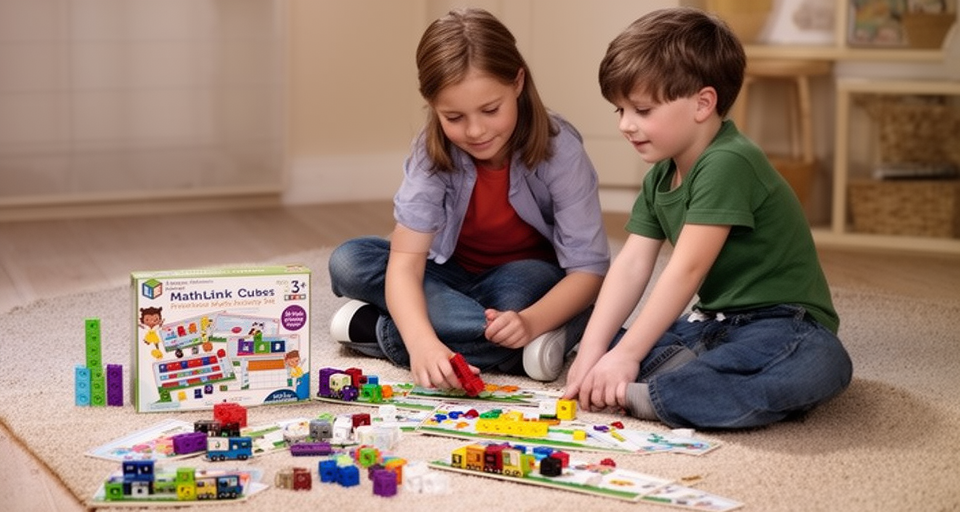
The Learning Resources MathLink Cubes Preschool Math Activity Set is a collection of interlocking plastic cubes designed to teach early math concepts through hands-on play. Each cube snaps together and pulls apart easily. Children can build chains, shapes and simple structures while practicing counting, patterning and basic arithmetic. The set is aimed at preschool classrooms, homeschoolers and parents who want a tactile way to introduce math.
What this set does well
These cubes are simple, focused tools. They turn abstract ideas into something children can touch and manipulate. Key uses include:
- Counting and one-to-one correspondence.
- Recognizing colors and creating patterns.
- Introducing addition and subtraction with visible units.
- Developing fine motor skills and hand-eye coordination.
Pros
- Durable and lightweight plastic that stands up to classroom use.
- Bright colors that help with visual sorting and pattern games.
- Easy to connect and separate for small hands.
- Versatile for many activities: counting, measurement, grouping, and simple engineering play.
- Compatible with many lesson plans and Montessori-style activities.
Cons
- Small pieces are a choking hazard for children under 3. Supervision is needed.
- Plastic can look and feel cheap compared with wooden manipulatives.
- Some children may quickly outgrow the challenge for more advanced math concepts.
- Loose pieces can be easy to lose; storage solutions are required.
Who should buy this
This set suits preschool teachers, daycare centers and parents of 3–6 year olds. It is a good choice for classrooms that use hands-on math centers or for families doing Montessori-inspired activities at home. The cubes work well for multi-sensory learners and kids who benefit from visual and tactile supports when learning counting and early operations.
Who might want something else
If you need manipulatives for older children (grade school and up) this set is likely too basic. Also, if you prefer natural materials, wooden counting blocks or beads may be a better fit. Families concerned about small parts or plastic waste might look for larger, fewer-piece options or eco-friendly alternatives.
Quick comparison with similar products
Compared with generic link cubes, the Learning Resources set is comparable in durability and color range. It usually includes classroom-friendly counts and sometimes teaching guides, which some cheaper sets omit. Wooden counting rods or number tiles offer a different sensory feel and last longer, but they lack the snap-together flexibility that allows children to build three-dimensional models and directly represent numerical sums.
Practical tips
- Use small trays or zip bags to keep pieces organized by color or activity.
- Pair the cubes with simple worksheets: ask children to build and draw the same structure.
- Introduce one concept at a time: patterns first, then counting, then basic sums.
- Rotate sets with other manipulatives to keep activities fresh and challenging.
Final assessment and recommendation
The MathLink Cubes Preschool Math Activity Set is a practical, low-friction tool for early math. It does what it promises: makes counting and simple arithmetic tangible. It is neither a comprehensive curriculum nor a long-term solution for older students, but for preschool and early kindergarten use it supports key learning goals. The product’s strengths are its ease of use, bright visuals and versatility for many short activities.
If you run a preschool classroom or want a hands-on way to introduce math concepts at home, this set is worth considering. If you prefer materials with a longer lifespan or want to reduce plastic, compare wooden alternatives before buying. Overall, for targeted early math practice and playful learning, MathLink cubes are a sensible, classroom-ready option.